

The US Environmental Protection Agency (EPA) has introduced a new initiative aimed at strengthening technical support for drinking water and wastewater utilities across the country. Known as RealWaterTA, this program focuses specifically on aiding small and rural systems by refocusing federal support on practical measures that directly improve water quality and protect public health. …
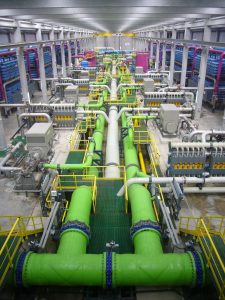
While desalination is a globally proven technology, California projects have faced regulatory roadblocks at the state level. A new report from the California Policy Center and Californians for Energy and Water Abundance outlines how the federal government can bypass these hurdles by developing facilities directly on federal coastal lands under the Coastal Zone Management Act…
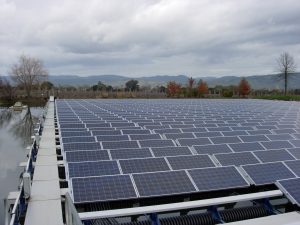
Floating solar panel projects offer a promising clean energy solution (see TWR #259 for more information on this innovative technology). A new study evaluates potential environmental impacts of these projects and finds that results vary significantly depending on where the systems are deployed. The floating solar technology offers several key advantages including: Can boost…

A groundbreaking simulation from Princeton and the University of Arizona reveals that groundwater flow paths travel much farther and deeper than previously understood. By tracking water across 3 million square miles, researchers discovered that raindrops and snowmelt can travel underground for several hundred kilometers and spend up to 100,000 years in the subsurface before…
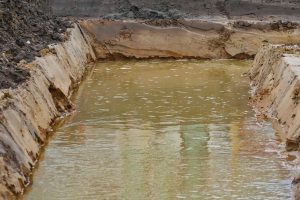
Researchers from Princeton and the University of Arizona have released the highest-resolution map of US groundwater to date. They have estimated that a total of 306,500 cubic kilometers of groundwater is available – 13 times the capacity of all the Great Lakes combined. Using a machine learning algorithm and more than one million data points,…
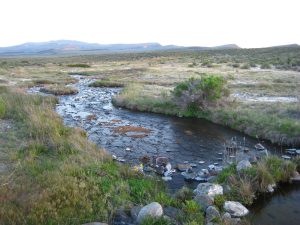
The Nature Conservancy in Nevada, DRI, and the University of Wisconsin-Madison have launched the Nevada GDE Water Needs Explorer Tool. This online resource helps managers quantify the water requirements of Groundwater-Dependent Ecosystems (GDEs) such as meadows, wetlands, and riparian forests. In Nevada’s arid environment, understanding how groundwater levels sustain these habitats is vital for maintaining…

The University of Arizona’s Water Resources Research Center (WRRC) is now accepting proposals for the federal WRRA grant program. These water research grant opportunities support university-based projects addressing Arizona’s water challenges. Eligible faculty from Arizona’s three state universities can submit proposals by March 16, 2026 for the WRRA 104(b) program. Selected projects typically receive…

Sea level rise, driven by climate change, significantly increases flood risk for industrial and contaminated sites across the United States. A new study, published in Nature, reveals thousands of hazardous sites could flood in the coming decades. This threat creates a massive challenge for public health and environmental protection, especially in coastal zones. The…

Two new studies from Scripps Institution of Oceanography researchers offer encouraging news about the resilience of California’s beaches. The 2025 San Diego County Beach Report found most regional beaches gained width last year as they entered a post-El Niño recovery phase. Typically, El Niño years bring larger, more powerful waves that rip sand from…

The Colorado River Indian Tribes (CRIT) Tribal Council recently made history with a unanimous vote that granted legal river personhood status to the Colorado River. CRIT is the first community to bestow such recognition on the 1,450-mile waterway. This action represents a dramatic departure from Western water law, which historically treats rivers as property to…

The Value of Water (VOW) Campaign released a new research report, “Tapping Potential,” detailing the necessity of closing the nation’s water infrastructure funding gap. This study states that investing in water is essential for promoting economic growth, supporting job development, strengthening communities, and protecting public health. In fact, maximizing water infrastructure investment stands as one…

Communities and water utilities are grappling with the increasing need for infrastructure to support digital service demands. The American Water Works Association (AWWA) has released a white paper, titled Cooling the Cloud, which provides guidance for assessing the new challenges and opportunities arising from data centers. Data centers are high-impact customers for water utilities…

A new map, developed by a collaborative team from the University of Nebraska, depicts the legal water rights systems across the US. This innovative tool shows the variability of surface water and groundwater rights systems, which provide the foundation for water management and policy development. Understanding these boundaries becomes essential when developing and evaluating…

Tidal rivers provide essential water for drinking and irrigation. However, a new international study confirms these vital sources are facing increased vulnerability to saltwater contamination. The research shows that climate-change-induced drought and sea-level rise are intensifying salinity issues. And localized human activities such as channel deepening and excessive road salt use contribute to the problem. …

A University of California San Diego study has uncovers a hidden driver of global crop vulnerability: the origin of rainfall itself. The research traces atmospheric moisture back to its source, whether it evaporated from the ocean or from land surfaces. Understanding this balance provides a new tool to predict rainfall source vulnerability before drought strikes.…

A new study shows that the regulatory costs for lettuce growers in California has surged by over 1,300% in under two decades. This sharp financial increase now consumes 12.6% of total production costs ands adds to mounting pressure on the state’s agriculture. Labor, healthcare, and food safety drive the largest cost increases. Labor-related regulations,…

When buying property in Arizona, access to water can impact decisions, especially in rural areas. Unreliable communication about water security impacts buyer’s confidence. Ensuring licensed agents are equipped to communicate accurately about water resources is critical for clients and communities. This necessity motivated the REAL Water project, a new initiative reimagining Arizona water education. …

The Bureau of Reclamation (Reclamation) has launched the Small Storage Program grant, promoting federal assistance to enhance water storage opportunities across the Western United States and its territories. Authorized by the Infrastructure Investment and Jobs Act (IIJA), this initiative aims to secure water resources for future generations. This program represents a critical tool for developing…

A new study reveals that Nevada groundwater is declining as a result of intensifying drought and rising demand. This decline is jeopardizing groundwater-dependent ecosystems and long-term reliability in the state. Roughly half of Nevada’s counties rely on groundwater for over 80% of their water supply and about 20% of Nevada’s groundwater basins currently suffer from…

The US Environmental Protection Agency (EPA) recently released a planning toolkit that water utilities can use to prevent and respond to cyber incidents. Cyberattacks are a threat to national security and a water utility’s ability to provide water. These tools offer help to public water systems that need protect themselves and aid in risk…
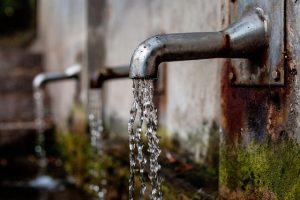
Millions of people across the US are being served drinking water polluted by chromium-6, arsenic, and nitrate – contaminants known to cause cancer and other health problems. A new report and interactive map from the Environmental Working Group (EWG) reveal the contamination hot spots. The report claims that many regulations are outdated and focus…
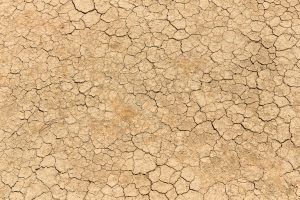
The World Meteorological Organization (WMO) shares a warning that the global water cycle has become increasingly erratic, swinging violently between deluge and drought. A new WMO report, called the State of Global Water Resources, highlights the cascading impacts of this instability on economies and communities across the globe. In 2024, only about one-third of…
Xcel Energy plans to sell water it once held for power production to farmers in the water-strapped Lower Arkansas River Valley. This deal, valued at over $44 million, will help the struggling region access vital water supplies and protect its agricultural economy. Advocates hope this sale will become a model for preserving farm water security…

Parties involved in the more than decade-long legal dispute over the Rio Grande water compact have filed settlement documents, potentially ending a costly lawsuit mired before the US Supreme Court. This four-part agreement addresses federal, state, and irrigation district concerns, aiming to establish stability in a drought-stricken region. The new settlement follows the Supreme…
Rice University researchers have collaborated with international partners to develop the first eco-friendly technology that can capture and destroy PFAS. This finding marks a major step toward addressing one of the world’s most persistent environmental threats: toxic “forever chemicals.” PFAS (per- and polyfluoroalkyl substances) are synthetic chemicals used in products from waterproof clothing to…