

In a move that underscores the growing urgency to address climate change and empower tribal communities, Senators Patty Murray and Maria Cantwell, alongside Representative Derek Kilmer, have announced a substantial investment of $9.3 million for six community colleges in Washington State. This funding, made possible by the Inflation Reduction Act’s NOAA Climate-Ready Workforce initiative, is…

The U.S. Environmental Protection Agency (EPA) announced a $1.5 million investment in three organizations through the Promoting Readiness and Enhancing Proficiency to Advance Reporting and Data (PREPARED) program. This initiative aims to enhance the ability of grant recipients, particularly small, underserved, and Tribal communities, to generate and utilize data for evaluating program outcomes and making…
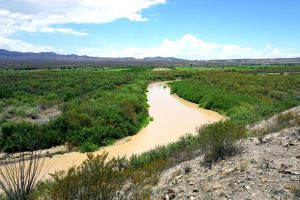
The way New Mexico manages its water resources is undergoing a major transformation. With the passage of the Water Security Planning Act of 2023, the state is essentially starting from scratch with its water planning regulations. This presents a unique opportunity for residents to have a say in how this vital resource is managed in…

The U.S. Environmental Protection Agency (EPA) is awarding $9.75 million in grants to coastal and Great Lakes communities to enhance their beach water quality monitoring and public notification programs. This funding, distributed under the Beaches Environmental Assessment and Coastal Health (BEACH) Act, will enable states, Tribes, and territories to conduct comprehensive testing for harmful bacteria…
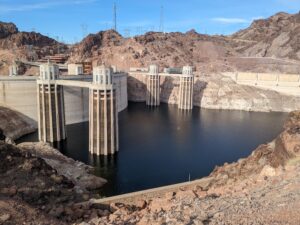
The Department of the Interior announced a $700 million investment to fund long-term water conservation projects across the Lower Colorado River Basin. This significant investment, part of President Biden’s Investing in America agenda, aims to save over 700,000 acre-feet of water in Lake Mead and enhance the region’s drought and climate resilience. The funding is…

The Environmental Protection Agency (EPA) has unveiled its 2024-2027 Climate Adaptation Plan. This plan outlines the agency’s strategy for addressing climate change impacts and building a more resilient nation. Below are some of the key components of this plan. Climate-Ready Workforce: EPA is investing in employee education and training to ensure staff understand climate…
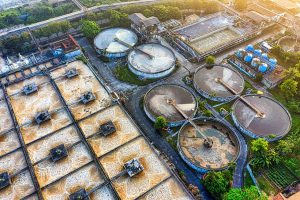
Per- and polyfluoroalkyl substances (PFAS), often referred to as “forever chemicals” due to their persistence in the environment, have become a major concern for public health and water quality. These man-made chemicals have been linked to various health problems and are increasingly being detected in drinking water supplies. A recent development in the ongoing…

A recent rule finalized by the Environmental Protection Agency (EPA) establishes a national framework for considering tribal treaties and reserved rights when setting water quality standards under the Clean Water Act. Key takeaways: Clear Framework for Tribal Rights: This rule replaces a case-by-case approach with a consistent national framework for considering tribal rights in…

The health of the Lower Duwamish River and Elliott Bay in Seattle, Washington, is at the centre of a recent lawsuit filed by the United States Department of Justice. The lawsuit names Crowley Marine Services, Inc., 8th Avenue Terminals, Inc., and the Washington State Department of Transportation (WSDOT) as defendants, alleging they are responsible for…
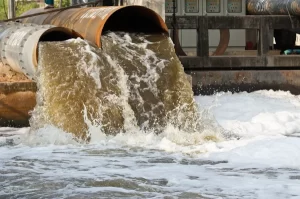
The US Environmental Protection Agency (EPA) and the California Attorney General, on behalf of the San Francisco Bay Regional Water Quality Control Board, filed a civil complaint against the city for alleged violations of the Clean Water Act (CWA). This lawsuit centers on the discharge of billions of gallons of untreated sewage from San Francisco’s…

The Department of the Interior recently announced a new rule aimed at guiding the balanced management of America’s public lands. The Public Lands Rule, implemented by the Bureau of Land Management (BLM), has significant implications for anyone concerned with the future of our public lands. This new rule prioritizes a holistic approach to public…
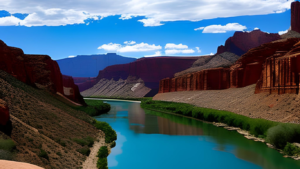
For decades, our understanding of Earth’s river systems lacked a crucial piece of the puzzle: a comprehensive picture of the volume of water they hold and how it fluctuates. A recent study led by NASA researchers and published in Nature Geoscience is revolutionizing this field. This groundbreaking research provides the first global accounting of Earth’s…

On April 26th, 2024, Arizona Governor Katie Hobbs and other prominent figures participated in a signing ceremony that finalized agreements allowing the Colorado River Indian Tribes (CRIT) to market a portion of their Colorado River water allocation to entities outside of their reservation. This landmark agreement represents a critical step forward in implementing the…

Public water systems in California are taking legal action against manufacturers of per- and polyfluoroalkyl substances (PFAS) in what could be a landmark case for the water industry. Orange County Water District and over a dozen other California water utilities filed a lawsuit in in early April against seven manufacturers of PFAS, including Dynax America…

PFAS contamination is a growing concern for agricultural operations, potentially impacting land use and posing risks to human health. Biosolids, a wastewater treatment product used as fertilizer, may be a source of PFAS contamination. Texas farmers from Johnson County are suing Synagro Technologies, Inc., a biosolids provider, for allegedly contaminating their land with PFAS…

Tyco Fire Products LP agreed to pay $750 million to settle lawsuits from water suppliers across the US. The settlement aims to resolve claims that Tyco’s firefighting foam, specifically aqueous film-forming foam (AFFF), contaminated drinking water with per- and polyfluoroalkyl substances (PFAS). The agreement, if approved by the court, would also release claims against…

The Department of the Interior announced on Apr. 2, that up to $320 million is available under President Biden’s Investing in America agenda through the Bureau of Reclamation to assist federally recognized Tribes and Tribal organizations as they plan and construct domestic water infrastructure. This funding opportunity is open to Tribes in the 17…
Great news for those working on climate resilience and ecosystem restoration in drought-stricken communities. The Department of the Interior has announced a significant funding opportunity through President Biden’s Investing in America agenda. Up to $95 million is available for projects that bolster water resources, advance ecosystem health, and support community resilience against drought and other…

A nationwide settlement between 3M and public water suppliers (PWS) regarding PFAS (“forever chemicals”) contamination has been finalized by a US District Court. This settlement offers financial assistance to PWS facing PFAS contamination in their water systems. The agreement covers past, present, and future PFAS detection, providing a broader scope of support. Payments are…

PRESS RELEASE: Draft management plan open for 90-days of public comment. The Bureau of Land Management and US Department of Agriculture Forest Service are seeking public input on a draft plan to guide management of the Bears Ears National Monument, incorporating considerable input from the Bears Ears Commission, the State of Utah, other cooperating agencies,…

Researchers at Oregon State University have made a significant advancement in removing glyphosate, a common herbicide, from groundwater. Key takeaways: A new metal-organic framework (MOF) called Sc-TBAPy has been shown to completely remove and break down glyphosate in water when exposed to light. This MOF offers advantages over other methods by acting more quickly…

Communities across the country are facing a growing wave of water challenges. Increased flooding, worsening droughts, water scarcity, and pollution are straining traditional water supplies. New approaches are needed to build resilience and ensure a sustainable water future for our cities. Stormwater capture has emerged as a promising tool in this fight. It offers…
The US Environmental Protection Agency (EPA) has proposed adding the Upper Columbia River Site in northeastern Washington to the National Priorities List (NPL). This designation would make the site eligible for cleanup financed under the federal Superfund Program. Why is the EPA proposing this? The EPA has determined that soils contaminated with lead…

Jacobs – an engineering and consulting firm – has joined forces with The Water Research Foundation to spearhead an essential development: a comprehensive environmental, social, and governance (ESG) framework and best practices guide tailored for water utilities within the United States. Why a Dedicated ESG Framework for Water Utilities? Water utilities shoulder a…

Beavers may hold unexpected value as natural firefighters. A recent Geological Society of America study demonstrates the impressive wildfire protection provided by beaver-dammed waterways. Researchers discovered that nearly 90% of beaver-dammed riverscapes qualify as fire refugia – offering protection for plants and animals during a wildfire – compared to only 60% of riverscapes without…